Because We Smell Good | Aug 19, 2026
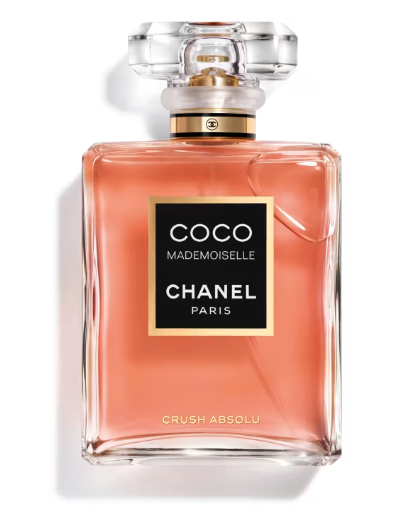
CHANEL COCO CRUSH ABSOLU

Because We Smell Good | Jun 12, 2026
On the scent

Because We Smell Good | Mar 31, 2026
“You smell good"

Valentino Vendetta’s latest fragrance film makes a case for the messy, irrational pleasure of purely wanting someone.
In an age of sexless economic malaise, Valentino’s new Vendetta fragrance film brings back the horny. Sexy, sweaty and unapologetically sensual, it’s exactly the dose of desire we’ve been waiting for.

As per the Oxford English Dictionary, the noun “Vendetta” is defined as “a family blood-feud, usually of a hereditary character” traditionally associated with “Corsica and parts of Italy”. Long-winded, melodramatic and promising-it’s a word that comes with a thirst for revenge baked into its very definition: passion, spite and more gruesomely- occasionally even murder. Valentino Beauty’s new fragrance, however, appears to have found a rather more contemporary target for its vendetta: the dry sexless economic malaise we’ve somehow found ourselves accustomed to.
Directed by Roman Gavras, the filmmaker behind ‘No Church in the Wild’ and ‘Athena’, Vendetta is the latest in a long lineage of fragrance campaigns that borrow the language, budgets and cultural cachet of Hollywood cinema. Starring Dakota Johnson and Alexander Skarsgard, respectively hot off the tails of the sexed up Materialists and Pillion, the pair play two lovers bound by an unequivocal chemistry, fleeing together in an us-against-the-world escape brimming with the charged glances, physical proximity and romantic tension that current right-wing populism is on a mission to censor. Valentino describes the film as a “return to passion as a disruptive and transformative force,” personally, I would say it’s a return to being horny.
By the by, its horniness may very well be the reason why Vendetta works. For now, there is something counter-cultural about making a fragrance advert about the unbridled desire involved in wanting another person at a time when so much of contemporary romance has become digitised, gamified and increasingly transactional. Dating is conducted through apps; desire is mediated through prompts, algorithms and the endless possibility of someone marginally better appearing with another swipe, should Hinge or whatever you use work in your favour. Even intimacy feels optimised- it is a threesome between you, your partner and the Silicon Valley technology that got you there.
Meanwhile, the cost-of-living crisis has made pleasure itself feel altogether like an irresponsible notion. Gone are the days of too many happy hour cocktails before a one-night stand or perving over someone across a nightclub (there’s none left!); we are living in an economy in which everything is measured against whether we can afford it, justify it or, ideally, live without it. Especially when it comes to sex. Or, if you're a romantic, love.


The film’s use of 35mm film and its retro-leaning soundtrack- The Pet Shop Boys’ all-time adulterous 80s classic: “It’s A Sin” heightens this feeling. By harking back to a period we are all apparently lustful for in which romance was the antithesis of what we experience now- physical, visceral and slightly dangerous, it evokes a time before every flirtation could be documented, screenshotted, analysed or reduced to an AI Hinge prompt. It is nostalgia at its finest for its very colouring is reminiscent of the home footage of your parents on their old Sony Camcorder- young, loved up and unaware of how passion has come to be diminished in the contemporary world.
There is something particularly apt too, about the song’s motif of sin. Written in part from Neil Tennant’s experience of inherited catholic guilt and shame, “It’s A Sin” gives Vendetta a moral vocabulary that couldn’t feel any more resonant now. Traditional relationship milestones are being repackaged as political virtues by the right, abortion and LGBTQ+ rights are under renewed attack, the wellness and homesteading movements have turned domesticity into lifestyle ideology and Gen Z’s therapeutic language of ‘knowing your worth’ can become a justification for retreating from people altogether.
Against all this, Vendetta strikes a more primitive chord in our body that as of recently has been put to rest. Our horniness, even if for the time being, is quenched.
Additionally, another of the campaigns’ greatest strengths is the fact that its passion doesn’t look remotely polished. Rather than presenting the remote, hyper-stylised eroticism that has defined so many luxury campaigns in which flawless celebrities become ever so slightly less wooden, Johnson and Skarsgard are allowed to get physical. Specifically- down and dirty. This is pivotal because contemporary luxury advertising has become extremely good at depicting aspiration and remarkably bad at depicting desire. Fragrance advertising has long borrowed the grammar of cinema: Baz Luhrmann’s 2004 Chanel No. 5 film with Nicole Kidman transformed perfume advertising into an extravagant mini-blockbuster (via a $20 million budget), David Lynch’s direction of Calvin Klein’s Obsession in 1988 brought the unsettling visual language of his cinema into fragrance and later, Wes Anderson and Roman Coppola’s Prada Candy turned the perfume commercial into a miniature romantic comedy starring Léa Seydoux. And whilst in each the vein of passion and romance throbs throughout, the ultimate feeling is one of identity aspiration. The viewer doesn’t necessarily want Nicole Kidman’s relationship with the struggling writer who whisks her away, they want to be Nicole Kidman. Beauty, wealth, wardrobe and all. And whilst that capitalisation may have worked in the past, today it wouldn’t. The younger market has been overwhelmingly oversaturated by the same beauty ideals on every platform, every advert and every film to the point that now it is fatigue. When Jacob Elordi gets announced as the face of yet another whatever, hell breaks loose.


Vendetta then feels different because its fantasy is less about becoming desirable than about desiring someone. Johnson and Skarsgard are simply two people who just appear genuinely unable to keep their hands off each other: sweaty, physical and inconvenient chemistry. And so, in an era obsessed with optimisation, Vendetta makes a subversive case for the irrationality we’ve been led to crave, fuelled by a nostalgia for when passion felt less mediated and more compulsive.
A vendetta, after all, is not a rational pursuit. It is an irrational compulsion that survives precisely because reason has failed to extinguish it. Valentino’s Vendetta, it seems, is restraint itself.
Shop our hottest and steamiest Valentino Beauty picks below...