BECAUSE IT'S HOT | Jun 23, 2026
Summer Exhibitions
Because we love art! | Jun 16, 2026
Get Enchanted

Because We're Obsessed | May 22, 2026
All roads lead to Roma


Down to earth
A new exhibition of artist Ana Mendieta launches at Tate Modern
The first retrospective of Cuban-American artist Ana Mendieta gets to the root of what made her such a consequential figure in feminist art.
Feathers, blood, hollowed-out tree trunks: these are just three of the many natural forms Ana Mendieta used in her visceral artworks, recently celebrated in a retrospective at Tate Modern’s Blavatnik wing. The first major UK survey of Mendieta’s work is a vivid, searching exhibition that gets to the heart of what made her such an important figure in performance, sculpture, and video art.
Mendieta was born in Cuba, moving to the USA when she was 12, growing up in foster homes across Iowa with her sister, before reuniting with her mother when she was 18. The majestic, rolling hills of Iowa would go on to inspire her work, as would her numerous experiences of racism in her new home. The certainty of destruction – of time making a mockery of man’s feeble attempts at permanence – would become a key theme in her work. Some of the first works the visitor sees are beachside sculptures of feminine forms slowly being washed away by the ebbing tide. Mendieta’s “Silueta” series, which replicated these bodily forms in limestone, fire, ice and flowers, among other materials, speaks to her interest in primitivism, of symbols that transcend language and culture altogether.

Ana Mendieta, Untitled: Silueta Series, 1977. © The Estate of Ana Mendieta Collection, LLC.

Ana Mendieta, Untitled: Silueta Series, 1976. © The Estate of Ana Mendieta Collection, LLC.
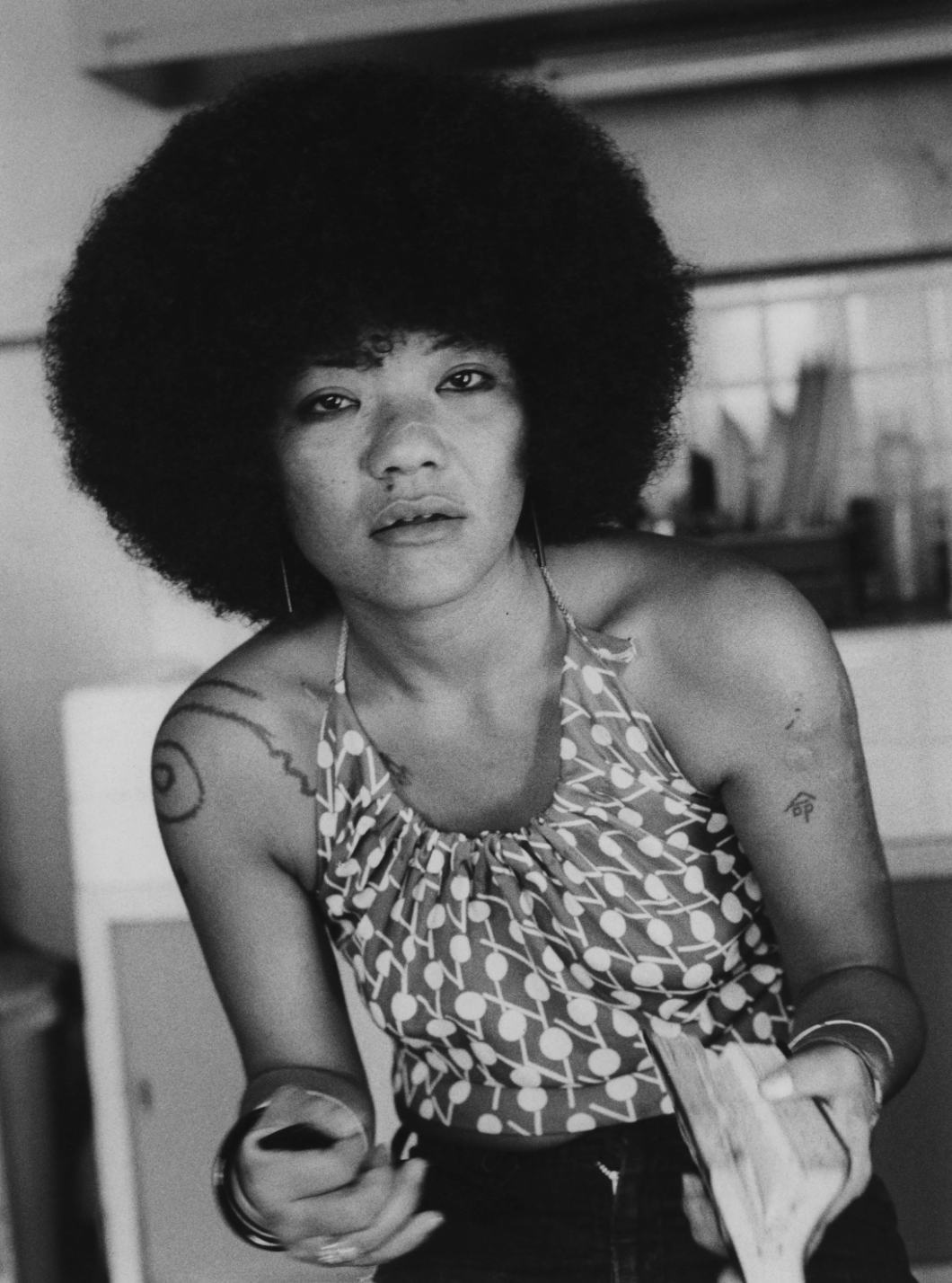
Some of the most arresting pieces here concern leakage, the blurry areas where the body ends and art begins. Blood was a recurring material: in one arresting work, she poured animal blood on a pavement and photographed the startled reactions of passers-by, a critique of man’s complicity in systems of violence. Another work, Sweating Blood, saw the artist’s face in profile while blood pours down her forehead, exploring this life-giving liquid’s function in rituals across the world. Mendieta was horrified by the rape and murder of a fellow student at the University of Iowa, and although she never explicitly identified as a feminist, her works interrogate the violence of patriarchy with a blunt, visceral intensity. There is humour here too: in one work, she photographed herself gazing into the camera wearing an oversized mustache, fashioned from beard hair donated by a friend, a comical nod to the identity struggles she had been reckoning with ever since leaving Cuba.
It would be easy to frame Mendieta’s career around the circumstances of her untimely death, at only 36, and the furore that followed. For the unaware, following a fight with her husband, fellow artist Carl Andre, Mendieta fell to her death from her 34th-floor apartment in New York City. The question of whether she jumped or was pushed has been contested for years: Andre was ultimately acquitted of her murder after a profoundly stigmatising trial, in which Andre's lawyer portrayed Mendieta as a hot-headed harpy prone to rash behaviour. (Mendieta had an avowed fear of heights, making suicide an unlikely prospect.) Andre’s future shows would be picketed by Ana’s friends and admirers, often holding placards asking “¿Dónde está Ana Mendieta?" – “Where is Ana Mendieta?”
The show wisely makes no mention of the cause of Mendieta’s death, allowing the works to speak for themselves in all their earthy beauty. Still, her untimely passing haunts the exhibition. She was a remarkably prolific artist with a conceptual rigour that inspires devotees half a century later. If she was making work of this magnitude while barely in her thirties, who knows what level she’d be working on today? We may never know, but until then, this expansive survey is a useful primer on one of the 20th-century’s most essential artists.
Ana Mendieta is on at Tate Modern until 17 Jan 2027 – book tickets here.

Ana Mendieta, Untitled, 1972. © The Estate of Ana Mendieta Collection, LLC.