
Because We're Obsessed | May 11, 2026
The Nordic New Wave

Because We're Obsessed | Mar 17, 2026
Sustainability on Show

Because It's Fab! | Jan 23, 2026
The Ultimate Scarf
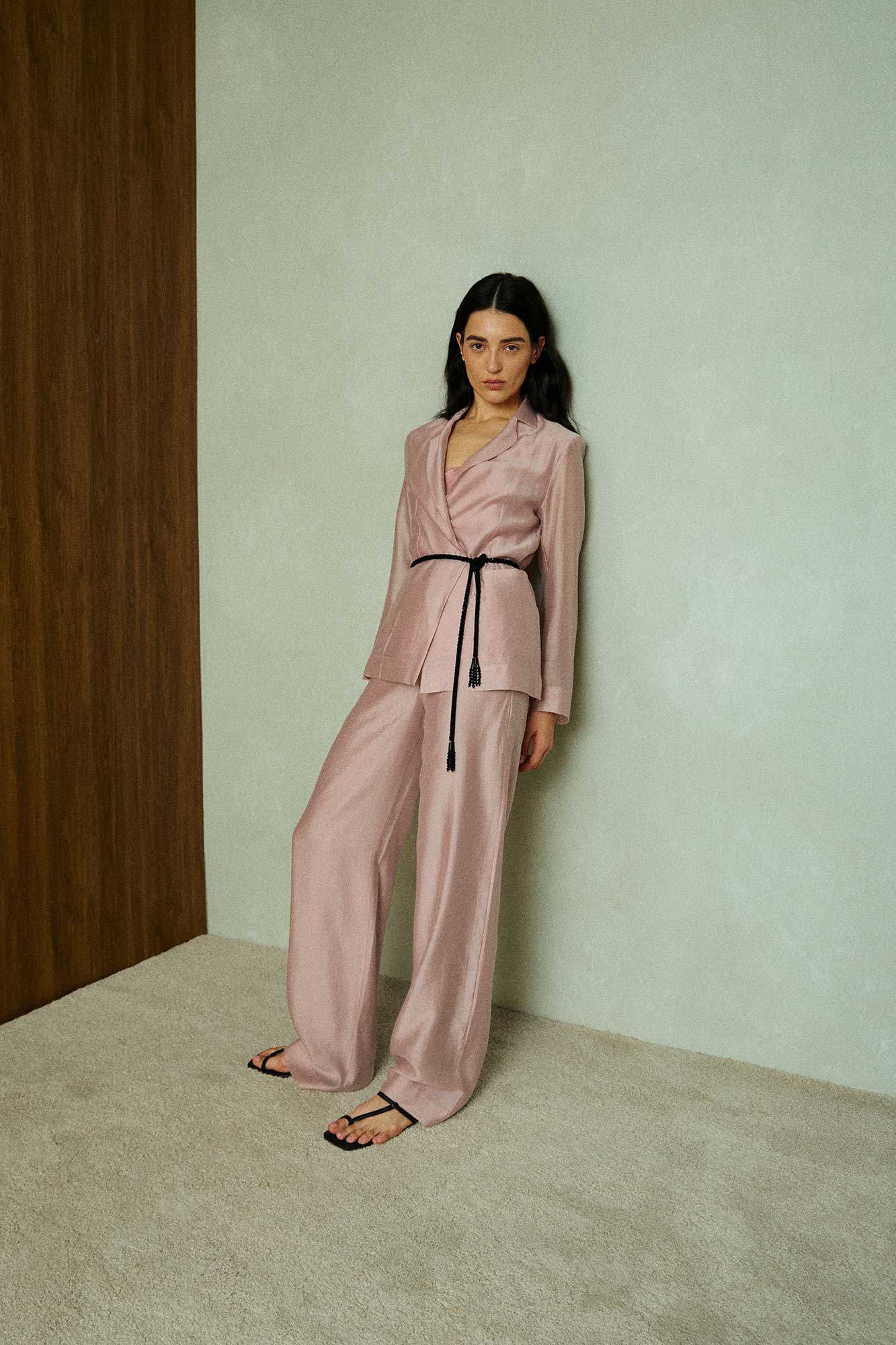

Female Founded: KINRADEN
Sarah Emilie Müllertz on architectural thinking, responsible materials and designing jewellery with longevity in mind
Sarah Emilie Müllertz has built KINRADEN around the belief that beauty and responsibility should go hand in hand. We caught up with the founder to discuss material innovation, female entrepreneurship and the stories embedded within the objects we wear.
Arguably, jewellery is among our most personal possessions, often carrying memories and meaning far beyond its material value. Whether it’s a pair of earrings, a bracelet or a ring - every piece of jewellery carries a story. But with growing scrutiny around the industry’s environmental and ethical practices, knowing where to invest can feel increasingly complex. That’s where KINRADEN comes in.
KINRADEN's distinctive approach to fine jewellery is rooted in the architectural background of founder Sarah Emilie Müllertz, who holds a Masters degree in Architecture from Copenhagen’s Royal Academy of Fine Arts and previously served as Global Head of Design at Henning Larsen Architects. Guided by a philosophy the brand describes as “the courage to not adorn or appease”, KINRADEN favours sculptural forms, thoughtful material choices and a considered relationship between object and wearer. Because caught up with Sarah Emilie Müllertz to discuss founding KINRADEN, translating architectural thinking into jewellery, and why responsibility continues to shape the future of the brand.
What was the turning point that prompted you to found KINRADEN?
There wasn't a single dramatic moment, but rather a growing realization that I wanted to create something that reflected my own values and design philosophy more completely.
During my years in architecture, I became increasingly fascinated by the relationship between material, form, and the human experience. At the same time, I was questioning many of the conventions surrounding luxury and consumption. I felt there was an opportunity to create objects of beauty that were both emotionally meaningful and responsibly conceived.


You originally trained as an architect. How has that background informed the way you approach jewellery design and building the brand?
Architecture has shaped everything I do. As an architect, you're trained to think beyond the object itself. You consider context, proportion, longevity, materiality, and how people interact with what you create. I approach jewellery in exactly the same way.
The pieces are often architectural in their construction, but more importantly, they are designed around the person wearing them. I think about how a piece feels on the body, how it catches light, how it ages over time, and the emotional connection it creates.
How does the jewellery sector continue to energize and challenge you creatively?
Jewellery sits at a fascinating crossroads between art, design, craftsmanship, and personal expression. What continues to excite me is the intimacy of it. Unlike architecture, which exists in a public realm, jewellery becomes part of someone's daily life. It carries memories, emotions, and stories.
The challenge is to create something that feels both timeless and relevant. I am constantly exploring how materials, craftsmanship, and design can evolve while remaining true to a clear point of view. That tension between innovation and permanence keeps the work endlessly interesting.
What's been the most unexpected source of inspiration behind a collection so far?
Often, the most unexpected inspiration comes from something very ordinary.
The Bricks collection is a good example. It was inspired by the brick bonds found throughout Copenhagen's architecture - something I have walked past thousands of times without consciously studying. Once I began paying attention, I became fascinated by the rhythm, repetition, and subtle variations within those structures.
It reminded me that inspiration doesn't always come from extraordinary places. Sometimes it comes from looking more carefully at the things that surround us every day.
Responsibility sits at the core of KINRADEN. How does designing with that responsibility in mind shape your aesthetic decisions?
For me, responsibility is not a layer added to the design process - it is part of the design process itself.
Every material choice carries aesthetic and ethical implications, and I believe the two should be considered together. Rather than asking how we can make a design more responsible afterwards, we begin by asking which materials, suppliers, and processes align with our values.
Interestingly, those considerations often lead to stronger creative outcomes. Our use of Mpingo blackwood, recycled precious metals, and now sapphires from carefully selected sources has shaped a distinct material language that defines KINRADEN.
Responsibility doesn't limit creativity. In many ways, it gives it direction.
Your pieces are designed to be lived in and worn daily. Which styles are you personally reaching for most at the moment?
I tend to wear jewellery very consistently. I don't change pieces often, which perhaps says something about my philosophy around design.
At the moment, I find myself wearing pieces from the Two Worlds and Bricks Collection almost every day. I love jewellery that feels effortless and becomes part of your personal uniform rather than something reserved for special occasions.
The pieces I return to most are usually the ones that have a quiet presence. They don't demand attention, but they reveal the longer you live with them.
Since launching KINRADEN, what have been the most rewarding and most difficult parts of leading an independent brand?
The most rewarding part has been seeing people form personal connections with the work. When someone tells me they wear a piece every day, have passed it on, or associate it with an important moment in their life, that's incredibly meaningful.
The most difficult part is probably balancing creativity with the realities of running a business. As a founder, you move constantly between design, strategy, production, finance, and communication.
At the same time, those challenges are what make building an independent brand so fulfilling. Every decision contributes directly to shaping the future of the company.


Was there a moment in building the company where you felt your vision for KINRADEN truly crystallized?
I think it happened when I discovered Mpingo blackwood and realized it wasn't simply a material choice - it was a manifestation of everything I felt KINRADEN should stand for.
The material embodied beauty, rarity, craftsmanship, responsibility, and innovation all at once. It allowed us to express our values through the product itself rather than through marketing or storytelling. That was the moment when the vision became tangible.
For women hoping to start their own brand or creative business, what advice has proven most valuable in your own experience?
The best advice I received was to build something you genuinely believe needs to exist. There will always be obstacles, uncertainty, and moments when progress feels slower than you'd like. A strong sense of purpose helps you navigate those periods.
I would also encourage women not to wait until everything feels perfectly planned. Confidence often comes through action rather than before it. Start, learn, adjust, and keep moving forward.
Most importantly, stay close to your own perspective. The uniqueness is often your greatest strength.
2026 seems to mark a new chapter of growth for KINRADEN. What has that expansion looked like so far, and what can people expect next from the brand?
This year feels like a natural evolution of everything we have been building over the past several years.
The launch of Bricks introduced a new expression and, importantly, marked the first time we introduced a new precious material into the KINRADEN universe through responsibly sourced sapphires. It represents both continuity and growth.
Looking ahead, we will continue deepening our exploration of material innovation, craftsmanship, and architectural form. There are exciting conversations around collaborations and new creative directions, but the ambition remains the same as it was on day one: to create meaningful objects that are designed with eternity in mind.
Growth, for us, is not about becoming bigger for the sake of it. It is about continuing to refine and expand the world of KINRADEN while remaining true to the values that define it.
Read more about the brand here.