Because We're Obsessed | Aug 26, 2026
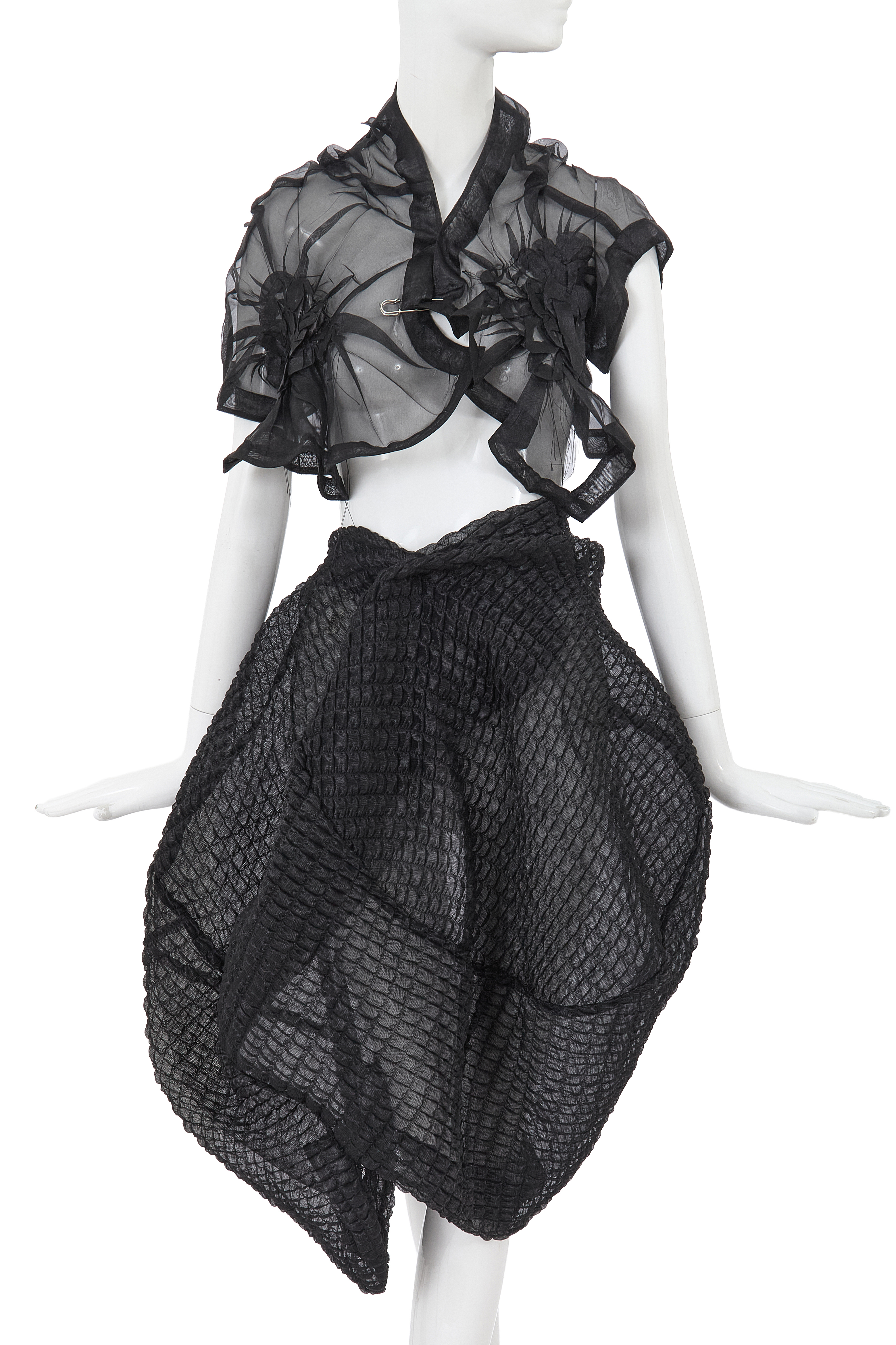
Comme Goes to Gavel

Female Founded | Jun 15, 2026
Female Founded: KINRADEN


Redefining Femininity
East meets West, softness meets strength, and tradition meets modernity in Joyce Bao’s vision in her London Fashion Week debut.
Joyce Bao speaks to us about redefining femininity through softness and strength, navigating her Chinese-American identity, and how duality, vintage craftsmanship and her experiences at The Row, Calvin Klein, Coach and Vaquera have shaped her approach to design.

You’ve been described as a “redefiner of femininity”. What does that mean to you within your own practice and the world you’re building through the brand?
I wanted to think of the brand as “redefining femininity” because of my personal experiences, having always been “defined” as an East Asian woman without having a say in other people’s presumptive perspective of me.
To me, it’s about rejecting the one-dimensionality of femininity. A garment can be delicate and still feel strong; it can be revealing without being sexualised for someone else; it can be romantic without being passive. That tension excites me in my own practice and motivates me to build a world that feels redefined in relation to what already exists in the name of “femininity”.
Female empowerment has become something of a cliché within contemporary culture, yet in your work it feels embedded in the clothes rather than imposed upon them. How do you approach femininity and empowerment without allowing either to become performative?
I think empowerment becomes performative when it has to be announced rather than felt. And I believe that I can make it feel embedded in the clothes because I put them on myself first.
I want to make sure that empowerment comes through subtly, the way a garment moves and the fabric feels on the body. The quietness in communicating empowerment is important to me. I believe that softness doesn’t negate power.
Before launching your own label, you worked at The Row, Calvin Klein, Coach and Vaquera, four very different design worlds. What have you carried with you from those experiences, and what did you consciously leave behind?
I loved that my past experiences all existed in such different design worlds. It took a while for me to anchor down my own design language and my own world, and I’ve been able to refer back to these experiences throughout my growth.
The Row was very much about restraint, and the finesse with materials, construction and proportion. Calvin Klein, when Raf was there, was a lot about storytelling and the power of good research, and that will always be significant to the foundation of each collection. Coach was a great experience for technicality and craftsmanship — on that level of a leathergoods business, every millimetre matters.
Vaquera was the most important experience to me, because they indirectly inspired me to go for my own brand. Patric and Bryn’s level of instinct when it comes to design and their resilience when it comes to business made me believe that if this is what you want to do, don’t let anything stop you.
You’ve often spoken about duality as both a personal and creative influence. How do you define duality within your own work, and why do you think you keep returning to it?
Duality to me personally is something I have always lived with, and often been denied of. Growing up, a lot of people wanted to have quick definitions of my background, but I wasn’t able to give it.
Creatively, people tend to be much more open about understanding duality or intersectionality, and it made perfect sense as an outlet for me. I keep returning to things that sit between two worlds, whether that’s putting lightweight and heavyweight materials together on a single garment, or creating tension between polished and imperfect, traditional references and a contemporary display. When that tension is refined and resolved in a design, it feels very satisfying and comforting to me.


You’ve described your work as challenging both Eastern expectations and Western stereotypes of Asian femininity. How have you experienced those expectations yourself, and how does the clothing allow you to push against them?
I became aware of those expectations during my formative years. I moved to Shanghai at a really young age, and moved back to Michigan as a teenager. Because of pop culture and Hollywood, people had very “interesting” expectations of me as an Asian girl, and a lot of these stereotypes were derogatory or fetishising in nature.
Eastern expectations are much more nuanced. They manifest in life trajectories, in what your life needs to look like as a Chinese woman. The path I have chosen so far also raised many questions from the Eastern side of my personal life.
Being questioned made me feel uncomfortable at first, but then I encouraged it because that opens up conversation against obliviousness and ignorance. Having this brand, making clothes inspired by the intersectionality of dual culture, gives other people opportunities to raise questions, and gives me opportunities to answer them.
If you had to choose one piece from the upcoming collection that encapsulates the collection as a whole, what would it be, and why?
I would choose this pleated skirt with a printed velvet band. It combines new techniques that we only developed for this season with the essence of the brand: a balance of delicacy and crispness.
It’s the relief print that we took from my mom’s thrifted lace curtains, and we hand-pleated them with the paper silk.
Shop our favourite pieces below!